
38
Stop layouts walked and compared across rest areas, overlooks, motels, and fuel pauses.
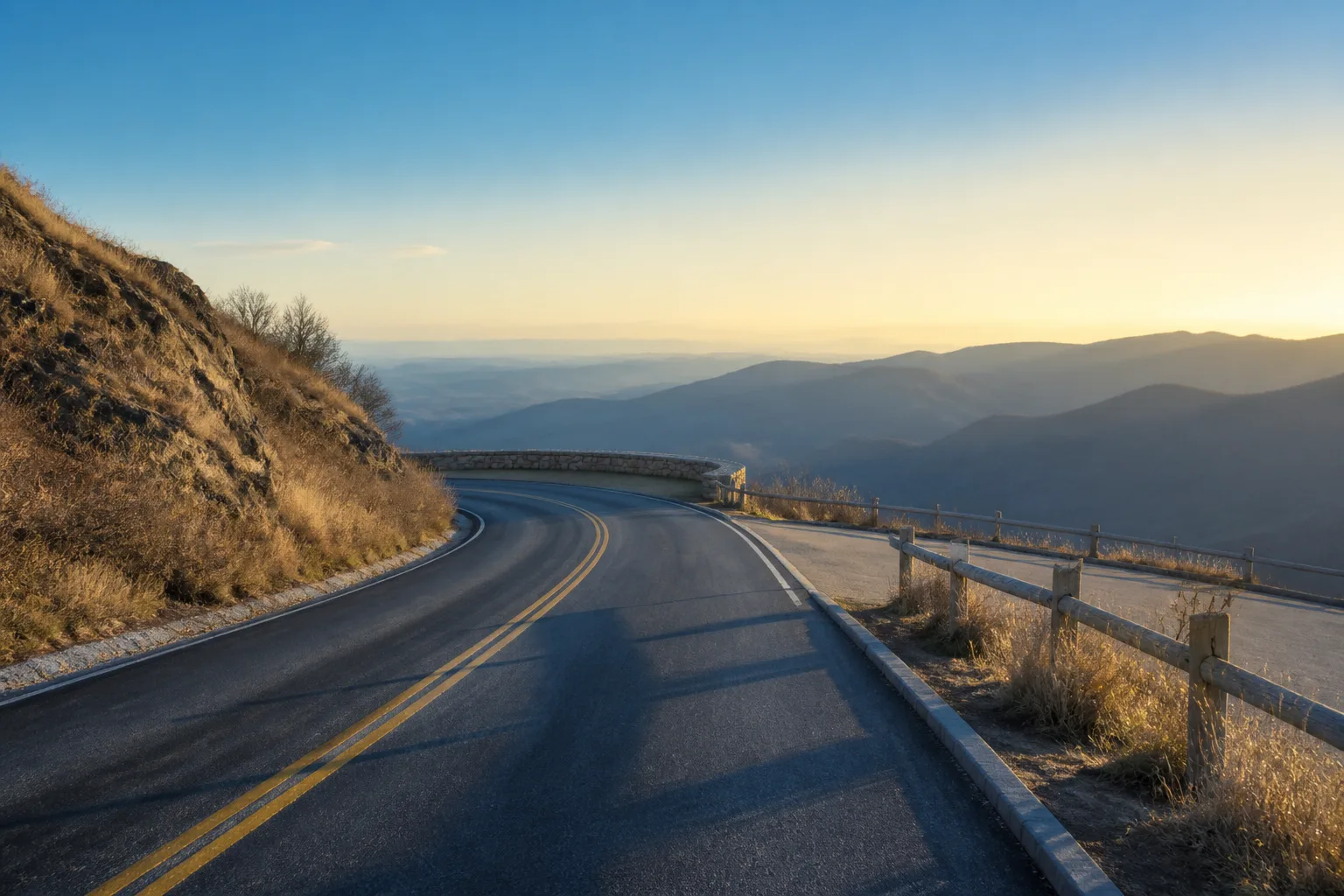
Field notes on highway days, rest stops, and the order of work that keeps a route intact.
A day on the road is not a transfer between beds. It is its own way of reading a place: when people leave, where they pause, how a small lot is shared, and what stays within reach in the cabin. The difficult part for a first long drive is rarely the vehicle. It is the sequence that regular travelers treat as obvious and almost never say out loud. We write that sequence down, then help you adapt it to the day you actually have.
Learn MoreWalk the center of a town and you meet shops, plazas, and the hour when streets fill. Drive the same region and you meet another clock. You see who leaves before breakfast, which pull-off is used as a genuine pause, how a rest area divides trucks from cars, and what people keep on the passenger seat because they expect to need it before the next stop. That is not a lesser version of the place. It is a working layer: departure habits, shared lots, and the quiet rules of not blocking a view that other people also came to see.
We treat that layer as the subject, not as scenery between hotels. A long day has a grain. If you ignore it, the map still looks short, the rest area is full, the overlook rail is closed without a posted notice, and you arrive after the light has gone, looking for a room in a lot that filled two hours earlier. If you respect the grain, you still meet delays. You just meet them with a sequence instead of a scramble.
The notes on this site come from watching how regular drivers actually move: what they finish at home, how they cut a day into pieces, where they are willing to wait, and what they refuse to decide at seventy miles of attention later. We do not dress the experience up. A cabin runs hotter or colder than the forecast, food at a stop can be gone earlier than it “should” be, and a stretch that looked modest on paper can eat the buffer you thought you still had.
These numbers describe the work of a small editorial team, not a platform and not a promise of an easy day. They mark how long we have been comparing stops, writing day plans, and sitting with people before a first long drive.
38
Stop layouts walked and compared across rest areas, overlooks, motels, and fuel pauses.
9
Seasons of field notes from actual highway days, including weather that forced a rewrite.
126
Day plans reviewed in consultations, from a single daylight run to a multi-night loop.
4
Stop families we return to in every briefing, because each one asks for a different pace.
People who make this kind of trip often do not explain their order of work, because it feels too ordinary to mention. It is not ordinary if you have never used it. The list below is the spine we walk through before anyone talks about “the nice stretch.”
Water, layers, paper backup for the map, and the bag you will actually open at a rest area belong in the cabin before you leave the driveway. Hunting for a bottle on a motel lot is how a calm morning turns into a late start. The point is not packing more. It is placing what you will need without leaving the seat while the car is moving.
A long daylight run is easier to hold when it is several shorter pieces with named pauses, not one heroic line. We plan segments that end at a real stop: a rest area with room to walk, a fuel pause that is actually short, or an overlook you can leave without blocking the next car. “Until we are tired” is not a segment. It is how people arrive after dark.
The unused hour is the part of the plan that still works when a rest area is full or a rail is closed. Spending that hour because the road “feels fine” is how the last motel search happens in the dark. We treat the buffer as reserved, not as leftover time waiting to be used.
Regular drivers pull in while they can still choose a bay, walk, and leave without hurry. Waiting until the cabin feels urgent usually means a crowded lot and a shorter fuse. Questions about fatigue, sleep, or physical strain belong with a qualified clinician, not with a travel note. Our part is the practical order: pause on purpose, then continue.
Arrival is not the end of the day. It is a short procedure: where the car sits, which bag comes inside, what stays locked, and how you leave in the morning without a corridor conversation at dawn. People who do this often make it look automatic. It is not automatic until you have done it once on purpose.
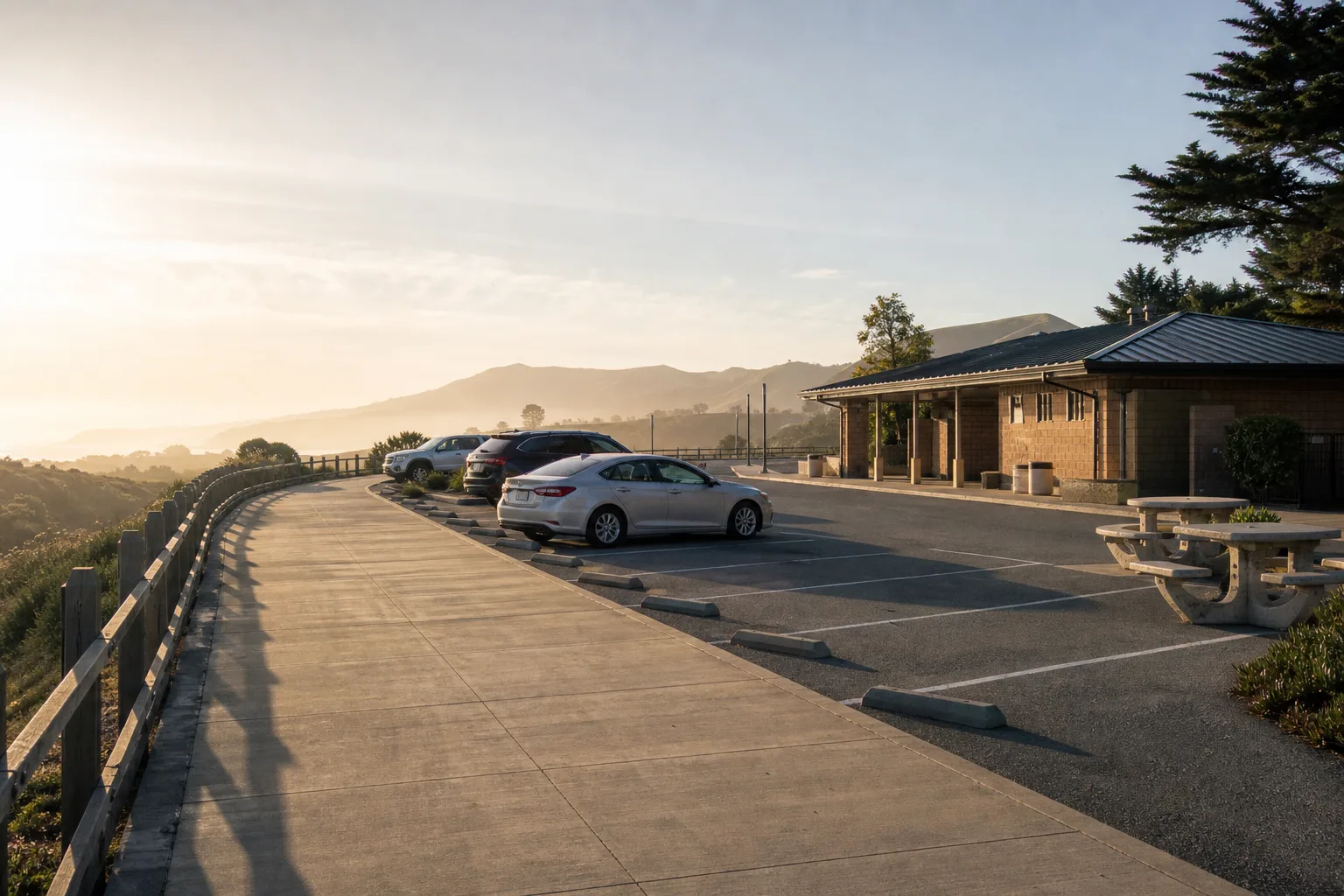
A rest area, an overlook, a roadside motel, and a fuel pause can sit on the same map and still ask for different behavior. Mixing them up is a common way to lose the thread: you “just stop for a view” in a lot meant for a ten-minute fill, or you try to eat a slow meal in a bay that needs to turn over. We keep four families on the table so the pause matches the job.
Park in a bay that leaves walking space, stay long enough to reset, and leave before the lot becomes a second living room. The unwritten rule is simple: other people need the same pause you needed.
Take a space, step away from the car, look, and release the rail. Holding a bay while you wait for “one more photograph” is how a short pull-off stops working for everyone behind you.
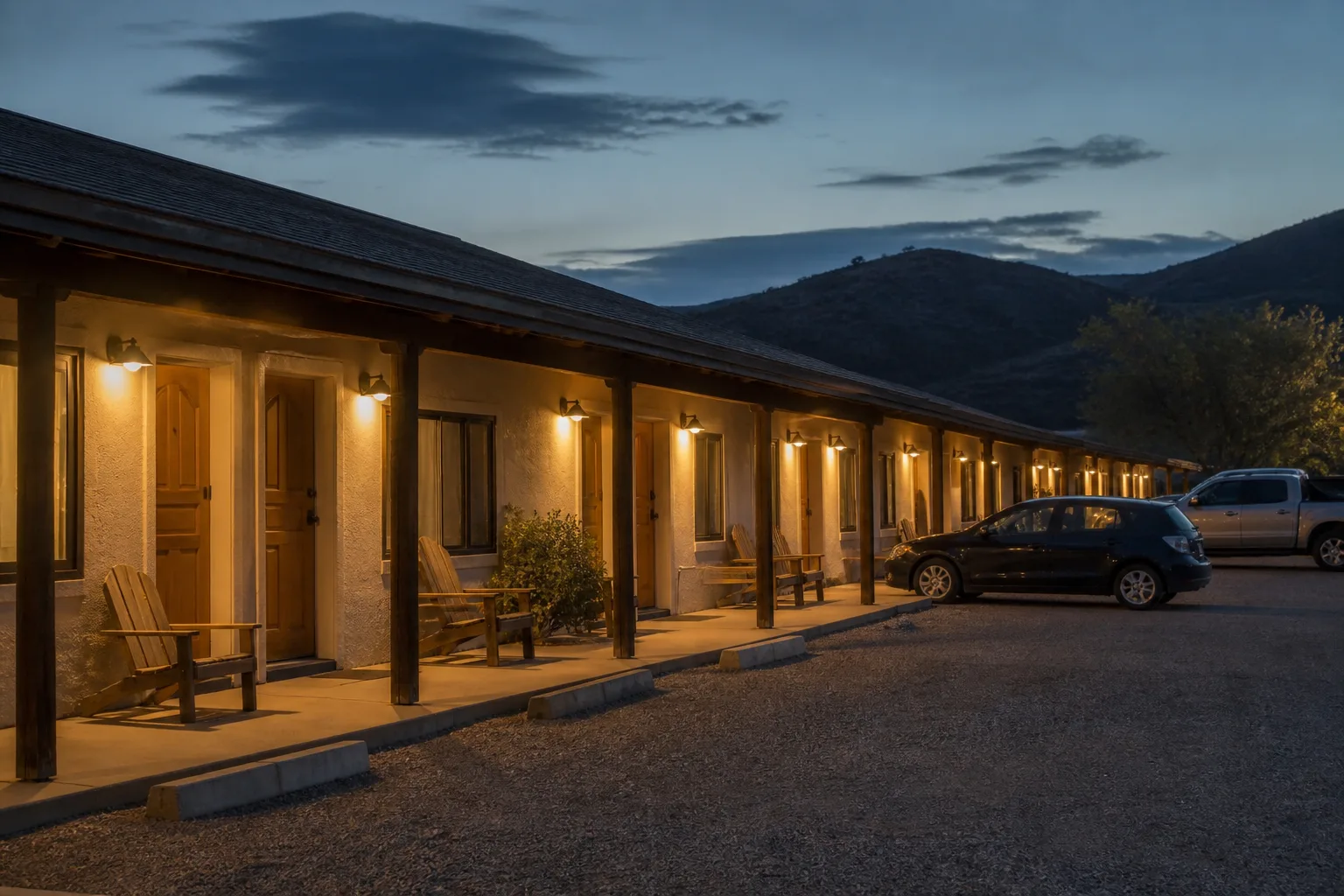
Night has its own map: which door you use, where bags live, and how you leave without noise. A full lot after sunset is not a surprise if the daylight plan used the last hour as extra road.
This stop is short on purpose. Fuel, water, a walk that does not become a picnic, and back to the segment. Stretching it into an unplanned meal is how the next overlook closes before you arrive.
Rain, heat, and poor visibility do not only change speed. They change which stop is still a good idea. We rewrite the day when the road asks for it: a later start, a shorter last segment, an overlook skipped because the rail is wet and the lot is small. The first long day should be the one you can finish in daylight without treating the map as a dare. Choose a route whose last planned pause still leaves a quiet arrival, then keep the buffer even if the middle of the day feels easy.
Consultations at chalcostib are personal, not automated. Three specialists collect the same kinds of days they help you plan, then turn the unsaid habits of regular drivers into a briefing you can actually use.

Field Itinerary Lead
Certified Multi-Day Route Briefing Practitioner, Open Highway Study Circle
Mara walks a day on paper before anyone leaves the driveway: fuel windows, overlook dwell time, and where a late arrival actually costs a quiet night. She also compares notes with the Overlook Keepers Exchange, a field group that documents how small pull-offs behave when they fill.

Overnight Logistics Researcher
Highway Lodging Systems Certificate, Rest-Stop Flow Workshop
Julian records how roadside lodging actually takes cars after dark, where bags go without blocking a corridor, and how a morning departure stays quiet. His briefs draw on the Open Range Lodging Cooperative, a working circle of independent motels that share lot-flow notes.

Cabin Readiness Advisor
Vehicle Cabin Organization Certificate, Daylight Drive Preparation Credential
Helena treats the cabin as a working room. Water, layers, maps, and the bag you will open at a rest area are placed so the driver never hunts while moving. First-time travelers usually meet her before they meet the route itself.
These notes are from people who asked for a briefing, used it on the road, and wrote back about what actually changed. They are not a promise that your day will look the same.
If you want a briefing before a first long drive, or a second look at a route that keeps losing its last hour, write to us. We will ask how you travel, what you refuse to rush, and which stop families matter on your days. Then we will answer with a sequence you can keep when the lot is full or the rail is closed.
Request a Consultationchalcostib exists to make the unsaid order of a highway day usable. We provide knowledge about rest stops, cabin setup, overnight habits, and the first long daylight run, then offer consultations for people who want that order fitted to their own trip. We do not sell a platform, a tracker, or a shortcut around weather and closed rails. We help you keep the thread.
chalcostib provides knowledge about road travel and consultations on how a highway day can be organized. The materials on these pages are offered for information and learning. They describe common patterns at rest areas, overlooks, roadside lodging, and fuel pauses. They are not a substitute for local rules, posted signs, or the judgment you use while driving.
Questions about fatigue, sleep, medication, or physical strain belong with a qualified clinician. A travel note cannot tell you whether you should drive on a given day. If you are unsure about your condition, speak with a professional who is licensed to advise on it. Do not treat anything on this site as medical guidance.
You remain responsible for the decisions you make on the road: when to leave, where to pause, whether to skip an overlook, and when to stop for the night. Conditions change between trips. Opening hours, access rules, lot layouts, weather, and on-site requirements can shift without notice. Confirm details directly with the place you intend to use, close to the day you travel, even if you have stopped there before.
chalcostib is not liable for delays, closed rails, full lots, or outcomes that follow from a plan you adapt, ignore, or only partly use. We write so that a first long day has a sequence. We cannot drive it for you, and we cannot freeze a rest area in the state described in a note.