

About chalcostib
We write the order of a highway day so first long drives keep their thread.
chalcostib began as a set of private trip notes and became a consultation practice. We still treat the cabin, the rest area, the overlook, and the overnight lot as working rooms with different jobs. This page explains how the project started, how we verify what we publish, and how a briefing is built with you.
Why this project exists
The idea did not come from a marketing brief. It came from watching capable people lose a day because the unsaid sequence never made it onto paper.
The gap we kept seeing
Travelers who knew how to drive still arrived after dark, circled a full motel lot, or spent twenty minutes hunting water on a rest-area apron. The map looked fine. The order of work did not. People prepared the scenic stretch and forgot the cabin bag, the buffer hour, and the quiet exit from an overnight stop.
Regular drivers already knew these habits. They finished checks at home, cut daylight into named segments, and left a view rail before the next car waited. They rarely explained any of it, because it felt too ordinary to mention. For someone on a first long day, ordinary is exactly what is missing.
What we chose to write instead
We chose highway days as our subject because a road trip is not only a line between beds. The pause families along that line show a place differently: who leaves early, which pull-off is shared politely, and how a short fuel stop is kept short. Writing that layer down felt more useful than another list of “pretty places.”
chalcostib stays small on purpose. We publish field notes, compare stop layouts, and offer personal consultations. We do not promise a platform, a tracker, or an easy road. We promise a sequence you can keep when the lot is full or the overlook rail is closed without notice.
How we gather and check a note
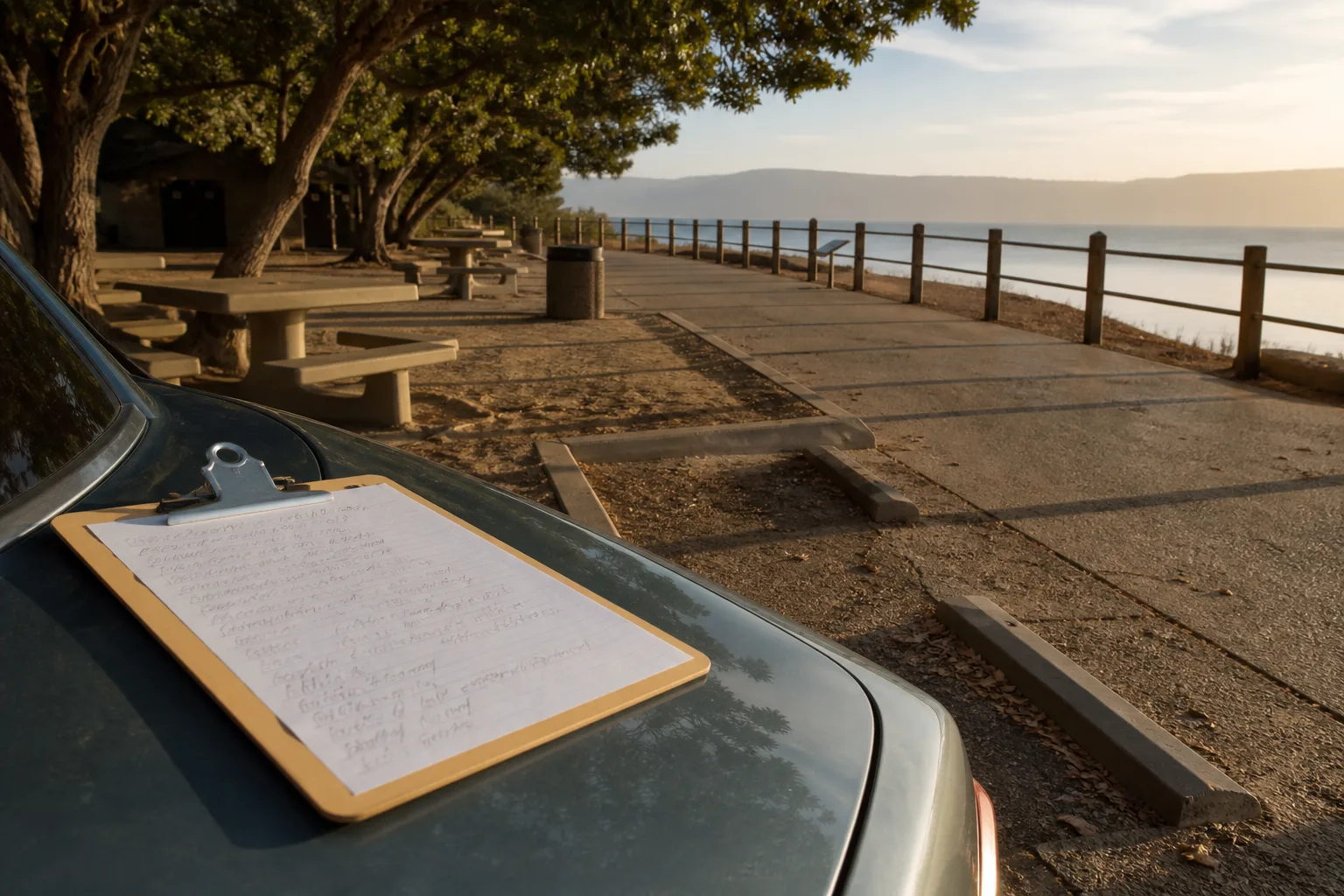
Every public note begins as a visit or a structured comparison, not as a paraphrase of someone else’s list. We walk the lot, mark how bays turn over, and write what a short pause actually requires. If we cannot see the behavior ourselves, we do not publish it as fact.
Before a draft leaves the desk, a second person on the team challenges the timing claims. A segment that “usually fits” must say what it assumes: daylight, a working restroom, and a lot that still has room to leave. When conditions are seasonal or change often, we say so in plain language and ask readers to confirm on-site details close to their travel day.
We also keep a reject pile. Notes that only praise a view, invent crowds, or turn a difficult day into a heroic story do not ship. Fatigue, sleep, and physical strain questions are redirected to clinicians. Our job is the practical order of stops, not medical advice and not a guarantee that a rail will stay open.
After publication we revisit materials when partners or field returns show a layout change. A closed restroom, a redesigned apron, or a new overnight rule can retire a sentence overnight. Updating quietly is part of the editorial promise.
From first request to a usable day plan
A consultation is a conversation with a written outcome. We do not hand you a generic template and call it personal. The steps below are the same spine we use for a single daylight run or a multi-night loop.
-
Intake without performance
We ask how you travel, who is in the cabin, what you refuse to rush, and which stop families matter. We also ask what already failed on a previous attempt. That failure list is often more useful than a wishlist of overlooks.
-
Segment draft
Daylight is cut into named pieces that end at a real pause: rest, fuel, view, or lodging. Each piece carries a buffer we treat as reserved. If the draft only works when everything is perfect, it is not ready.
-
Cabin and overnight notes
We place water, layers, and the rest-area bag so nothing is hunted while moving. Arrival and morning exit get their own short procedures, because night is a separate job from the road.
-
Weather rewrite and handoff
Before you leave, we walk through what changes if rain, heat, or a closed rail appears. You receive a briefing you can keep without us in the passenger seat. Confirming local rules remains your step on the day you travel.
How we ask travelers to treat a place
A highway day can show a region carefully or leave a mess for the next car. Our notes assume you want the first option.
Leave the rail, the bay, and the corridor the way you hoped to find them. A short pause that respects the next traveler is worth more than a long stay that blocks the lot.
That line guides how we write overlook dwell time, rest-area manners, and overnight exits. We do not treat local workers, lodging staff, or other drivers as scenery. Posted rules come first. Unwritten courtesy comes next: do not hold a view bay for a slow conversation, do not turn a fuel apron into a picnic, and do not start a corridor talk at dawn. When a place asks for quiet hours, we put those hours in the briefing instead of treating them as optional atmosphere.
We also refuse to frame a difficult day as a personal failure of the place. A full rest area, a wet rail, or a motel lot that filled early is part of the working layer. The ethical response is to adjust the sequence, not to force a stop that no longer works. Travelers who keep that posture usually leave with the route still intact and with fewer hard feelings behind them.
If a consultation request asks us to ignore access limits, invent shortcuts through private property, or treat posted signs as decoration, we decline. chalcostib exists to help people move day by day without erasing the order that keeps shared stops usable.
Partners we learn from, and how we choose them
Partnerships at chalcostib are working relationships, not logo walls. We collaborate with groups that share stop-flow notes, lodging habits, or overlook observations we can verify against our own visits. If a partner only wants promotional language, we do not proceed.
Selection is slow on purpose. We ask how a group records changes, whether they correct outdated layouts, and whether their advice still holds when a lot is crowded. We prefer partners who describe constraints clearly: dwell limits, quiet hours, apron etiquette, and what to do when a planned pause fails.
Names below are the circles we currently credit in briefings. They are independent organizations in our working notes, not ownership claims and not a marketplace. Mentioning them means we have used their observations alongside our field work, then translated the combined picture into language a first-time long-day driver can follow.
- Overlook Keepers Exchange
- A field circle that documents how small pull-offs behave when they fill, including how long cars hold a bay and when a rail should be released.
- Open Range Lodging Cooperative
- Independent roadside lodging operators who share overnight lot-flow notes, quiet-hour practices, and morning exit habits that keep corridors calm.
- Open Highway Study Circle
- Practitioners who compare multi-day segment plans and pressure-test buffer hours against weather and closed-stop rewrites.
Contact Us
If you want a briefing for a first long daylight run, or a second look at a route that keeps losing its last hour, tell us how you travel. We will answer with a sequence fitted to the day you actually have.
Request a ConsultationRead the field notes
Our articles turn repeated highway-day patterns into practical reading: cabin checks, segment planning, rest-area manners, and quiet overnight routines. Start there if you want the method before a call.
Learn MoreHow to read this site
chalcostib provides knowledge about road travel and consultations on how a highway day can be organized. The materials on these pages are offered for information and learning. They describe common patterns at rest areas, overlooks, roadside lodging, and fuel pauses. They are not a substitute for local rules, posted signs, or the judgment you use while driving.
Questions about fatigue, sleep, medication, or physical strain belong with a qualified clinician. A travel note cannot tell you whether you should drive on a given day. If you are unsure about your condition, speak with a professional who is licensed to advise on it. Do not treat anything on this site as medical guidance.
You remain responsible for the decisions you make on the road: when to leave, where to pause, whether to skip an overlook, and when to stop for the night. Conditions change between trips. Opening hours, access rules, lot layouts, weather, and on-site requirements can shift without notice. Confirm details directly with the place you intend to use, close to the day you travel, even if you have stopped there before.
chalcostib is not liable for delays, closed rails, full lots, or outcomes that follow from a plan you adapt, ignore, or only partly use. We write so that a first long day has a sequence. We cannot drive it for you, and we cannot freeze a rest area in the state described in a note.