Planning Your First Long Daylight Drive
The first long day should end with a quiet arrival, not a race against the last light. Choose a route whose final pause still leaves room to check in without circling a dark lot, then protect the order that keeps that ending intact.
Start with the ending you want
Many first long drives are planned from the morning outward: leave early, see as much as possible, arrive whenever. That order looks ambitious on paper and fails at lodging. A better start is the reverse. Decide what a quiet arrival looks like, then build daylight segments that still reach it when one stop goes wrong. The last planned pause should not consume the reserved hour. It should leave that hour standing.
At chalcostib, a first daylight run is not a dare against the map. It is a short sequence of named pieces: cabin ready at home, segments that end at real stops, manners that keep lots moving, and a buffer you do not spend. The route can be modest. The order cannot be vague.
Choose a route that forgives one failure
Pick a day that still works if an overlook is closed or a rest area is full. If the plan only succeeds when every stop is empty and every rail is open, it is too tight for a first long run. Prefer a final lodging target you can reach with light still on the lot. Confirm opening hours and access close to the travel day. Conditions change between trips.
- Fewer optional views beat a packed list of “must see” rails.
- Named pauses beat “drive until we feel done.”
- A written buffer beats a hopeful gap at the end of the map.
- A cabin set at home beats a first stop spent hunting water.
A shorter day that ends cleanly teaches more than a long day that ends circling a full lot after dark.
Build the day in order
Use a sequence you can repeat. Do not invent a new system on the morning you leave. The driveway check, the segment list, and the drop list for a slipping day should already be on paper.
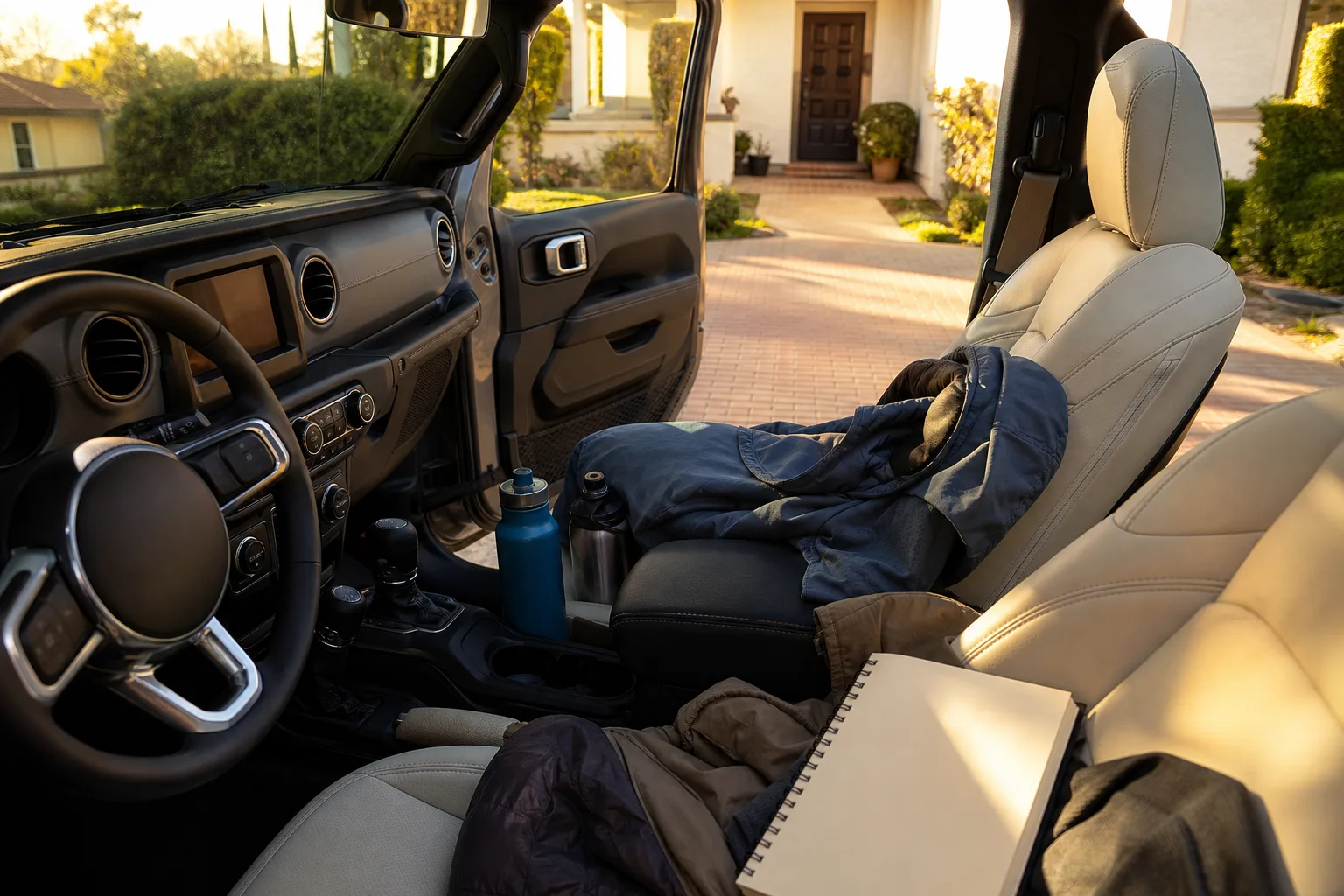
- Finish cabin readiness at home, including the rest-area bag Helena describes in her notes.
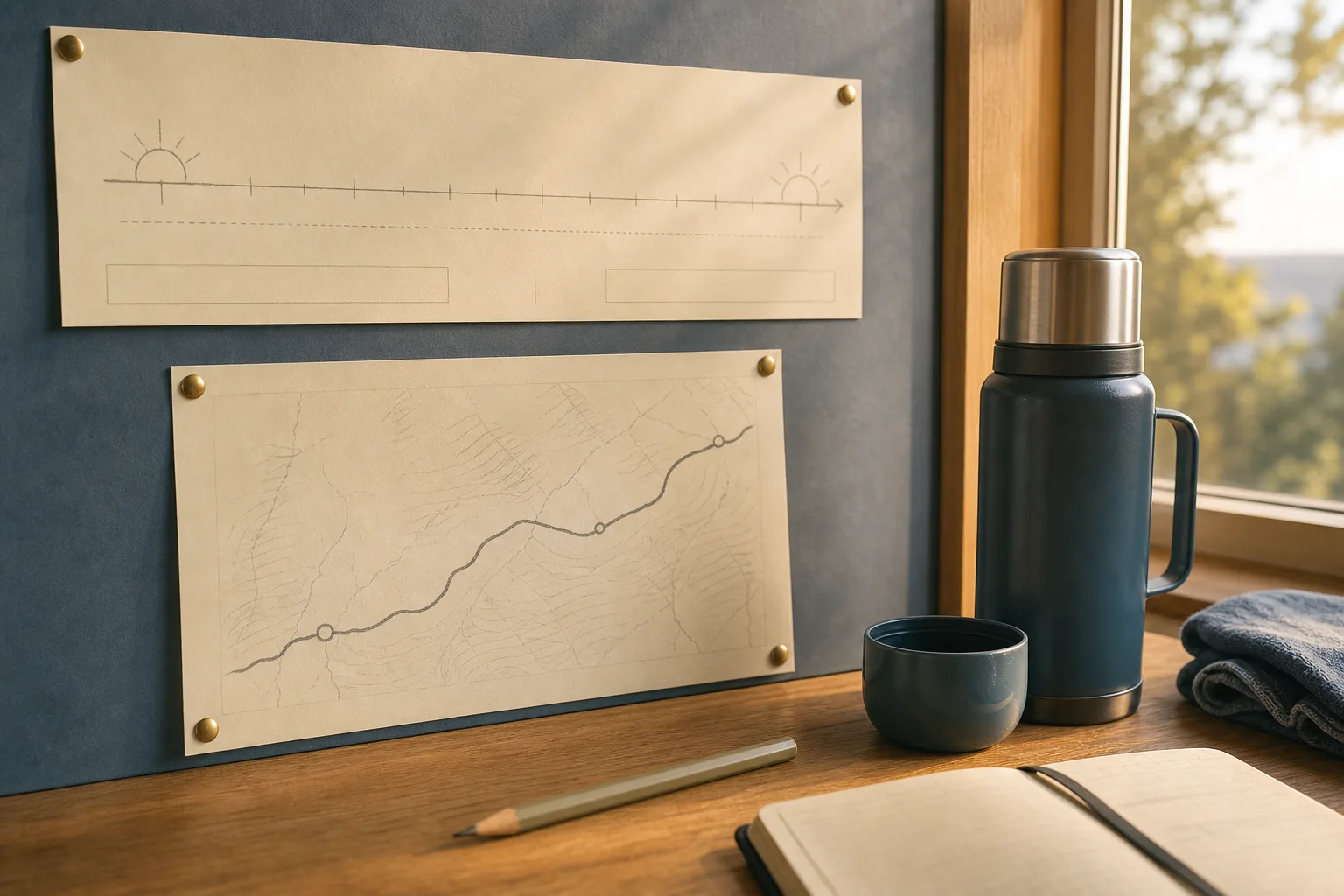
- Cut daylight into segments that end at rest, fuel, view, or lodging—not at exhaustion.
- Mark the reserved hour and the first optional stop you will drop if the day slips.
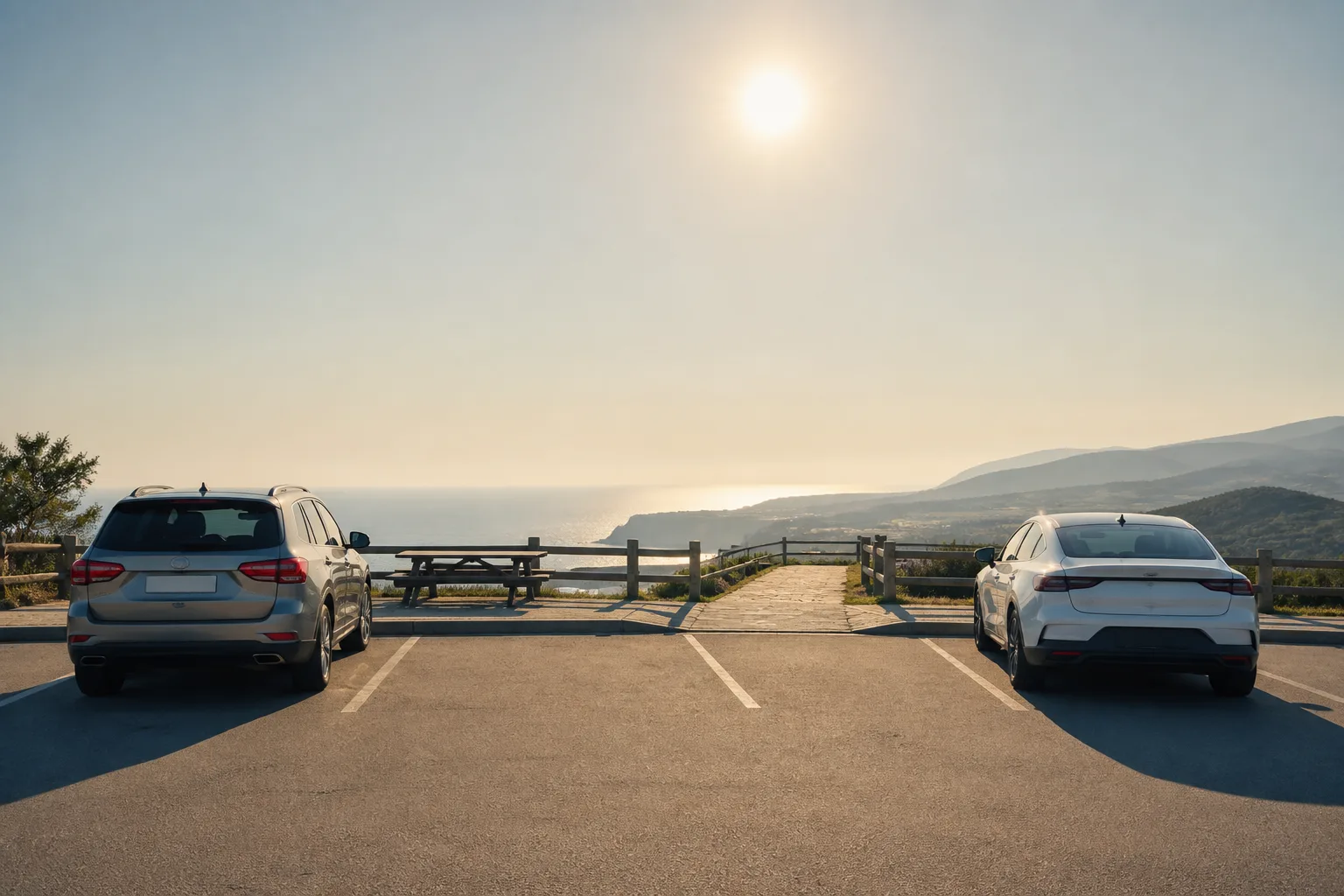
- Plan overlooks as short jobs with exits, following the manners Julian outlines for small lots.
- Rewrite for weather before you “make up time” on the final stretch.
What success looks like on a first long day
Success is not covering the maximum distance. Success is arriving while you can still park, carry the right bag inside, and leave the corridor quiet. You may skip a view. You may leave a full rest area and take a shorter reset elsewhere. You may end earlier than the fantasy version of the map. Those are not failures. They are how the thread of the day stays intact.
Shared driving and traveling with children do not change the core order, but they do change how long a pause may need to be. Say the cabin layout out loud before you leave. Keep the rest-area bag usable without a full unload. Build slightly shorter segments if resets take more time. The first long day is still a daylight plan with a reserved hour, not a test of how far the map can stretch.
After the trip, note what leaked the buffer and what held. That short record is more useful than a list of scenic names. It becomes the starting point for the next briefing: which stop families failed, which cabin placements slowed a pause, and whether the final lodging target was realistic. Regular travelers improve by keeping those notes. First-timers can borrow the same habit from day one.
This guidance is informational. It is not a promise of an easy road and not medical advice about how long anyone should drive. If you are unsure about fatigue or physical strain, speak with a clinician. If you want a personal briefing for a first daylight run, contact chalcostib with your cabin setup, your daylight window, and the stops that already failed once. We will help you plan a day that can still end in the light.